

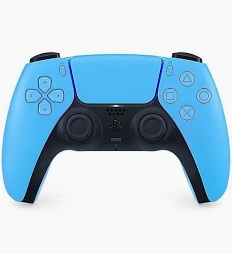
Direct Answer: Controller stick drift happens when the sensor inside the analog stick wears or gets contaminated and starts registering movement you’re not making. Cleaning and recalibration can help temporarily, but Saved Game finds that a proper stick module replacement — ideally to a Hall effect sensor — is what actually fixes it for good.Key Takeaways
- Drift comes from physical wear or contamination on the stick’s internal sensor, not something a software fix can permanently solve
- Cleaning and recalibration are worth trying first, but rarely fix drift caused by genuine wear rather than dust
- A Hall effect replacement module is the most durable fix, since it has no physical contact left to wear out

Stick drift is one of the most universally frustrating faults in gaming, precisely because it’s so small and so disruptive at the same time — a character that won’t stand still, a camera that slowly creeps in a direction you never touched. It affects Xbox and PlayStation controllers in almost equal measure, and there’s a good reason cleaning and recalibrating only ever seem to help for a little while.
What’s Actually Happening Inside the Stick
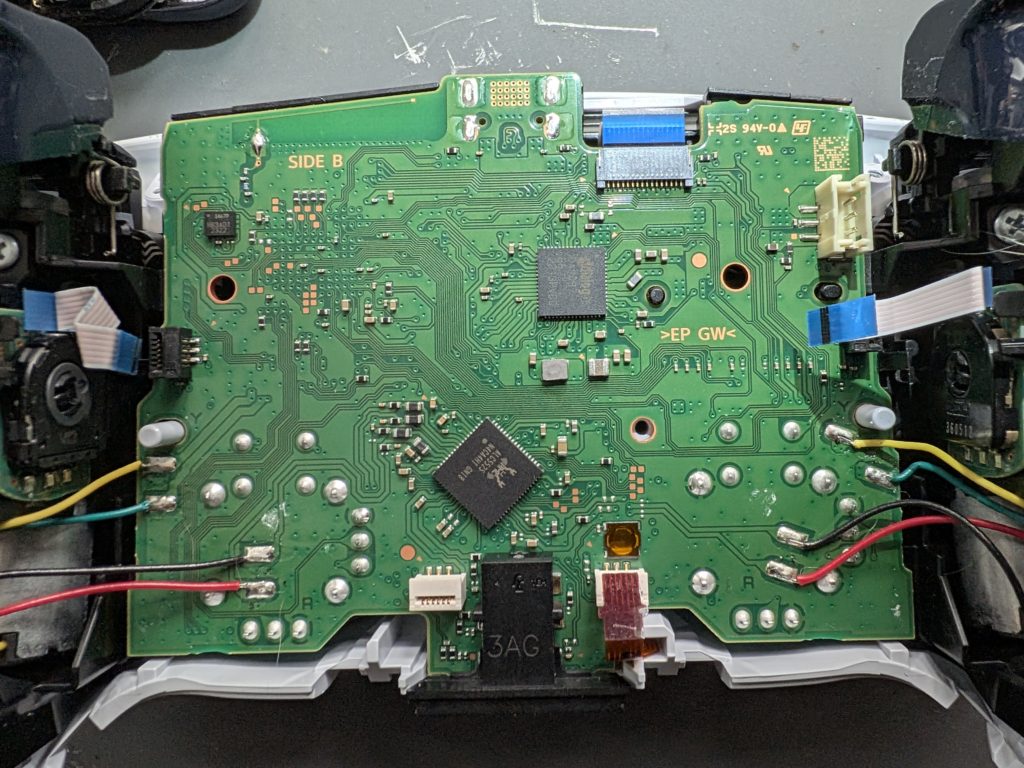
Most standard controllers use a small component called a potentiometer to track stick movement — a resistive track with a tiny contact that slides across it as you move the stick, translating physical position into an electrical signal the console reads as input. That sliding contact is a mechanical wear point by design. Over enough hours of use, the track wears thin in the areas used most (centre position gets the most wear of all, since that’s where the stick sits by default), and once it’s worn enough, the sensor starts reporting a position that doesn’t match where your thumb actually is. Dust, skin oils, and general grime getting into that same contact area can cause an almost identical symptom without the track being worn at all — which is why cleaning genuinely does fix some cases, just not all of them.
Why It Happens to Nearly Every Controller Eventually
This isn’t a manufacturing defect specific to one brand or one bad batch — it’s a consequence of how a physical-contact sensor works, and it affects Xbox and PlayStation controllers built around the same underlying technology in very similar ways. The more hours a controller sees, and the more demanding the movement (competitive shooters and racing games are particularly hard on sticks), the sooner wear-related drift tends to show up. It’s less a question of if than when, on any controller using a traditional potentiometer stick.
Quick Fixes That Sometimes Help — and Why They Don’t Last
Compressed air around the base of the stick, or a careful clean with isopropyl alcohol, can genuinely resolve drift that’s caused by contamination rather than wear — worth trying first, since it costs nothing and takes a few minutes. Recalibrating the stick through the console’s system settings can also help temporarily, since it resets what the system treats as the stick’s true centre point, effectively hiding a small amount of drift rather than fixing its cause. Neither of these does anything to reverse a worn track, though, which is why drift caused by genuine mechanical wear tends to creep back within days or weeks even after a successful clean or recalibration.
What Actually Fixes It for Good
The only genuine fix for a worn stick is replacing the part causing the fault. A like-for-like potentiometer replacement resolves the drift, but it’s still the same wear-prone design underneath, so it can eventually drift again after enough further use. The more durable option is a Hall effect replacement module — this uses a small magnet and a contactless sensor to detect stick position instead of a sliding physical contact, so there’s no track left to wear down the same way. It’s currently the closest thing to a permanent fix for stick drift, and it’s a straightforward swap for a technician working at board level.
| Fix | Cost | How Long It Lasts |
|---|---|---|
| Compressed air / cleaning | Free to very low cost | Only if the cause was dust/contamination, not wear |
| System recalibration | Free | Days to weeks — masks mild drift, doesn’t fix the cause |
| Standard potentiometer replacement | Low | Genuine fix, but the same wear-prone design underneath |
| Hall effect module replacement | Moderate | Most durable option — no physical contact left to wear |
Is It Worth Repairing, or Just Buying a New Controller?
This comes down to which controller you’ve got. On a premium pad — an Xbox Elite Series 2 or a PlayStation DualSense Edge — replacement costs considerably more than a stick repair, so fixing it is the clear financial choice, and it also means keeping the extra features those controllers offer that a standard replacement wouldn’t have. On a standard controller the gap is smaller, but repair, especially with a Hall effect upgrade thrown in, still tends to work out cheaper than buying new, while also meaning one less controller heading to landfill.
Frequently Asked Questions
What causes controller stick drift?
Stick drift happens when the sensor inside the analog stick — usually a small potentiometer — wears down or gets contaminated with dust and skin oils, causing it to report stick movement even when your thumb isn’t touching it.
Does cleaning a controller actually fix stick drift?
It can improve mild drift caused by dust or debris, but it doesn’t reverse physical wear on the sensor itself. Cleaning is worth trying first since it’s free, but if the drift returns within days or weeks, the part itself needs replacing.
Does recalibrating the controller fix stick drift permanently?
Recalibration through system settings can mask mild drift temporarily by resetting the stick’s centre point, but it doesn’t repair the worn component causing it, so the drift typically returns.
Is stick drift more common on Xbox or PlayStation controllers?
It affects both roughly equally, since most standard controllers from both platforms use the same type of potentiometer-based stick internally. It’s a mechanical wear issue tied to the component, not specific to one brand.
What’s a Hall effect stick and does it stop drift for good?
A Hall effect stick uses a magnet and a contactless sensor instead of a physical wearing contact, so there’s no worn track to cause drift the same way. Replacing a drifting stick with a Hall effect module is currently the most durable fix available.
Is it worth repairing stick drift or just buying a new controller?
Repair is usually the better value, particularly on premium controllers like an Xbox Elite pad or a DualSense Edge, where replacement costs considerably more than a stick module repair. On a standard controller it’s closer, but repair still tends to work out cheaper.
Can stick drift come back after a repair?
A standard potentiometer replacement can eventually wear again over years of heavy use, the same as the original part did. A Hall effect module replacement is far less likely to develop drift again, since it doesn’t rely on physical contact wearing down.
Can Saved Game repair controller stick drift by mail-in?
Yes. We repair Xbox and PlayStation controller stick drift UK-wide by mail-in, and can fit Hall effect replacement modules for a more permanent fix.
Get Your Controller’s Drift Fixed Properly
If cleaning and recalibrating haven’t sorted your controller’s drift, our mail-in repair service covers Xbox and PlayStation controllers UK-wide, including Hall effect module upgrades for a lasting fix. Current pricing is on our repair prices page, and if you’d rather pick up a ready-to-go controller instead of repairing your own, take a look at our shop.

Leave a Reply