

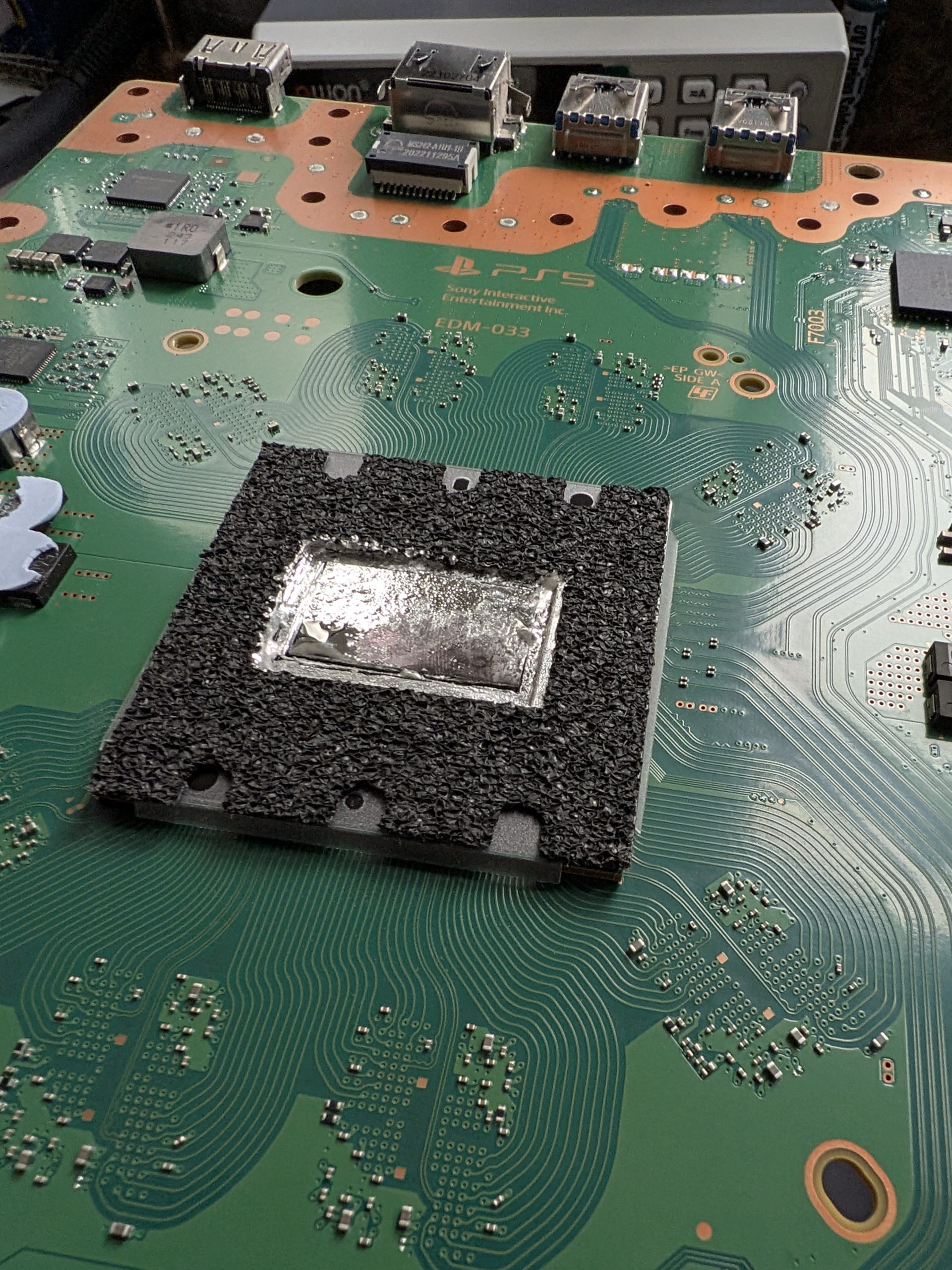
I fix this exact fault multiple times a week — no exaggeration, some weeks it’s daily. A PS5 that shuts off instantly, mid-game, no warning, no error message, just gone. Every time one comes in, I go through it like an X-ray machine — model number, revision, heatsink, the lot — before I even touch the thermal interface. Here’s everything that’s actually going on inside, in plain English.
The Real Cause: Liquid Metal Migration and Bald Spots
Sony uses liquid metal (not thermal paste) between the APU and the heatsink on every PS5 model, because it’s the only interface material that can keep up with the heat these consoles produce under sustained load. The problem is liquid metal doesn’t stay put.
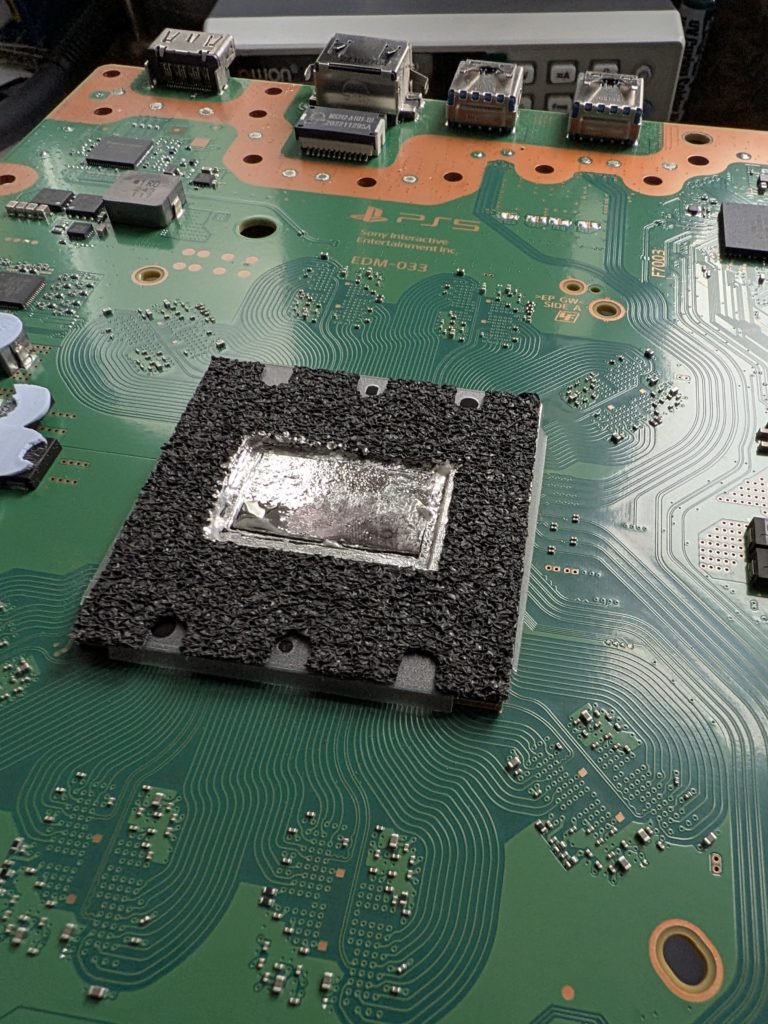
Some spreading is completely normal — it’s common to open a console and find more liquid metal sitting at the edges of the die than in the centre. That’s not a fault by itself; liquid metal’s job is to fill the microscopic gap between the APU and the heatsink, not to sit in a thick layer on top of it, so edge migration on its own doesn’t mean something’s wrong.
The problem is what happens over time. Liquid metal oxidises with heat and air exposure, and that process is gradual and unavoidable — there’s nothing you can do to stop it happening eventually. As it oxidises and continues to migrate, you end up with a bald spot: a tiny patch of the die with no coverage at all. It doesn’t take much. Even a bald spot smaller than a grain of rice creates a hotspot, and the console’s protection kicks in and cuts the power instantly, with zero warning. This is exactly why the fault feels so random and inconsistent — it often only shows up under heavy load (big 4K TV, demanding game) because that’s when that one uncovered spot finally gets hot enough to trip the cutoff.
Realistically, these consoles need the liquid metal checked and re-spread roughly once a year to stay ahead of this. That’s not a scare tactic to sell servicing — it’s genuinely how the material behaves.
The Heatsink Fault That Catches People Out
Liquid metal isn’t the only cause, and it’s worth ruling this one out first. A batch of consoles left the factory with a heatsink defect: the cold plate isn’t properly soldered to the copper heat pipes at every corner, and it can detach with normal heat cycling over time. If that joint has let go, you can reapply liquid metal perfectly and still get the same shutdown, because the heat’s got nowhere to go regardless of the interface material. Any proper inspection checks this before assuming it’s purely a liquid metal issue.
Upright or Flat — Does PS5 Orientation Actually Matter?
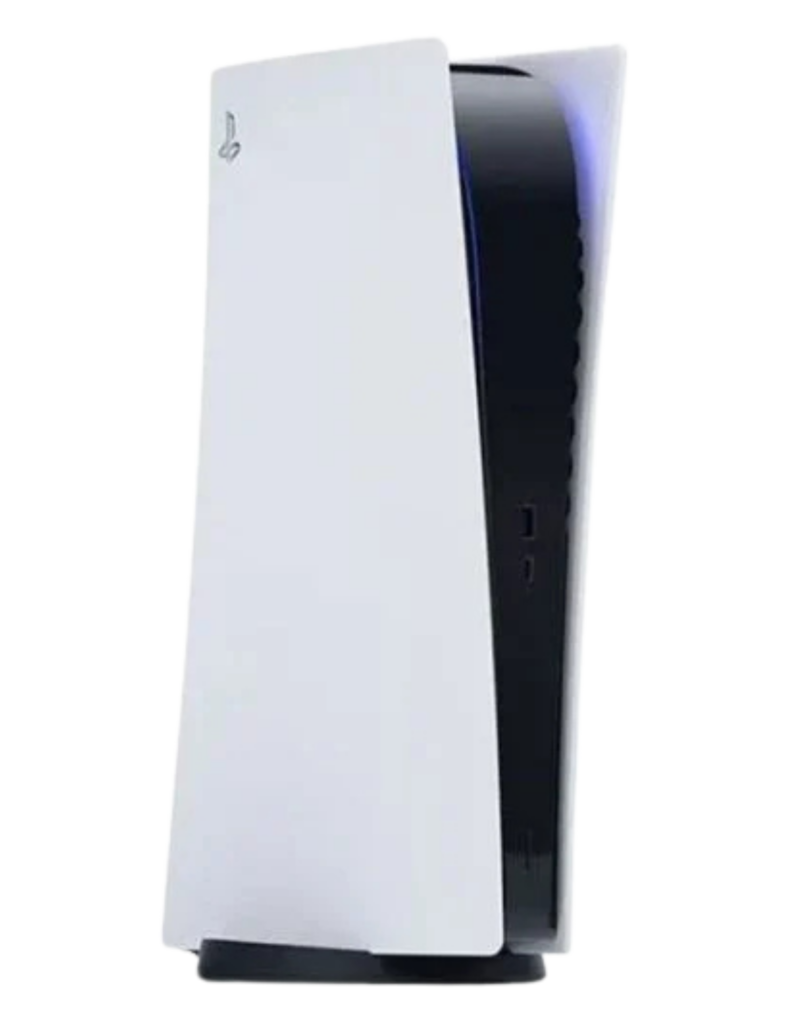
Yes, and this one surprises people: lay it flat, not upright. Sony sells it with a stand and plenty of official photography shows it standing vertically, but that’s a design and shelf-space decision, not a thermal recommendation, and in my experience it works against you over the console’s lifespan.
Liquid metal is a dense, heavy alloy, not a paste. Standing the console vertically for years means gravity is constantly pulling that liquid metal downward across the die, on top of the migration and oxidation that’s already happening naturally. That accelerates bald spots forming at the top of the coverage area — exactly where you don’t want them. Laid flat, gravity works with the interface staying evenly seated instead of dragging it toward one edge over time. If you’re after the longest possible stretch between thermal services, flat is the better call.
Why Liquid Metal — Not Thermal Paste, Not Graphite Pads
I get asked this constantly, so it’s worth spelling out properly.
Liquid metal: roughly 60–120W of heat dissipation per mm² of die (some specialist formulas claim up to 150W). These figures are for illustration, not a precise spec sheet, but they show the scale of the gap.
Standard thermal paste / PTM: roughly 6–12W per mm².
Graphite pads: roughly 10–30W per mm².
Graphite looks like a reasonable middle ground on paper, but the way it’s made works against it — a single layer of graphite atoms conducts heat extremely well, but you can’t manufacture anything usable that thin, so pads are built from thousands of stacked layers with microscopic air gaps between each one. Heat has to cross every single layer to get through, which drags the effective performance right down.
Bottom line: a PS5 will power on with ordinary thermal paste. It just won’t survive launching a game — it’ll overheat almost immediately under real load. Liquid metal isn’t optional on this hardware, it’s what the thermal design was built around.
Can the Original Liquid Metal Be Reused?
Liquid metal itself doesn’t expire and won’t go “off” or become contaminated on its own — but that only applies if it’s been stored correctly, in a proper liquid metal syringe, not just wiped off and left exposed. Once it’s been wiped off a die and left sitting in open air, treat it as gone. Reusing genuinely stored, uncontaminated liquid metal is fine; reusing whatever’s already smeared around inside a console is how you end up with the exact same fault six months later and the console back on the bench for the same reason.
Why I Don’t Recommend DIY Reapplication
I’ll be straight with you: this isn’t like reapplying paste on a PC. Liquid metal is electrically conductive, and even a small amount finding its way onto the motherboard rather than staying on the die can short components — sometimes ones far more expensive to replace than the repair would’ve cost in the first place. A proper job means fully cleaning both the die and the heatsink plate before anything fresh goes back on — no reusing what’s already been wiped off — and the surface needs to end up smooth, not gritty or scratchy, before reapplication. That’s the standard I work to on every one of these that comes through the door.
If you’re technically confident and understand the risk, that’s your call. If you’re not sure, it’s genuinely one of the easier ways to turn a straightforward thermal fault into a much more expensive board-level repair.
SavedGame PS5 Liquid Metal & Thermal Repair – Hull and East Yorkshire
I handle PS5 shutdown, overheating and liquid metal reapplication for customers in Hull, Beverley, Brough, Goole, Driffield and across East Yorkshire, with drop-off, callout and postal options. I operate out of Mend My iPhone, 9 Southgate, Market Weighton, YO43 3AF. Full pricing, including the thermal/liquid metal service, is on the PS5 repairs page. We also have specific a specific PS5 page to help you identify which model you have here and a page dedicated to the PS5 Slim so, again, you can identify the correct model you have if you need to book a repair. We have listed all the model numbers.
Why does my PS5 shut off instantly with no warning?
Almost always a hotspot caused by a bald spot in the liquid metal, or occasionally a heatsink cold plate that’s detached from the copper heat pipes. Both cause the console’s thermal protection to cut power immediately rather than let it run hot.
Should my PS5 stand upright or lie flat?
Flat. Standing it vertically for extended periods lets gravity pull the liquid metal downward over time, speeding up bald-spot formation compared to laying it horizontally.
How often does a PS5 need the liquid metal redone?
Roughly once a year for consoles in regular use, due to natural oxidation and migration over time — not a fault, just how the material behaves.
Can I use thermal paste instead of liquid metal on a PS5?
The console will power on, but it will overheat almost immediately under real gaming load. Liquid metal is what the PS5’s thermal design requires, not an optional upgrade.
Is it safe to reuse the liquid metal already in my console?
Only if it’s been properly stored in a liquid metal syringe. Anything already wiped off and exposed to air should be treated as contaminated and replaced.
Other Posts :
- PS5 Won’t Read Discs, Won’t Eject or Grinds: Model-Specific Fixes
- ModRetro M64: What It Is, What It Does, and Who It’s For
- Will Steam Deck Get GTA 6? Everything Steam Deck Owners Need to Know (2026)
- PS5 Fan Connector Repair | Ripped Off by USer
- Is Your Console Actually Dead? The 10-Minute Check Before You Bin It

Leave a Reply